NIB - MORSKA BIOLOŠKA POSTAJA PIRAN

New publication: Dynamic sinking and surface-area based decay modeling reduce estimates of gelatinous zooplankton-mediated carbon export to the deep sea
Researchers from the Marine Biology Station, Piran (National Institue of Biology) and from the University of Vienna have constructed a mathematical model of sinking-decaying gelatinous zooplankton in the global ocean.
Gelatinous zooplankton or jellyfish may play an important role in the biological carbon pump, namely by transporting surface particulate organic carbon to the ocean floor. The aforementioned researchers have proposed two novelties in modeling of jellyfish. First, they derived a coupled model of the particle vertical sinking speed and its mass decay. Secondly, they proposed a modified mass decay equation, where the decay is dependent on the particle's surface area rather than its mass. These novelties reduce previous estimates of the amount of jellyfish-mediated carbon that reaches the seafloor by 43 % (to 0.68 petagrams of carbon per year).
The article is available online in Global Biogeochemical Cycles: publication link
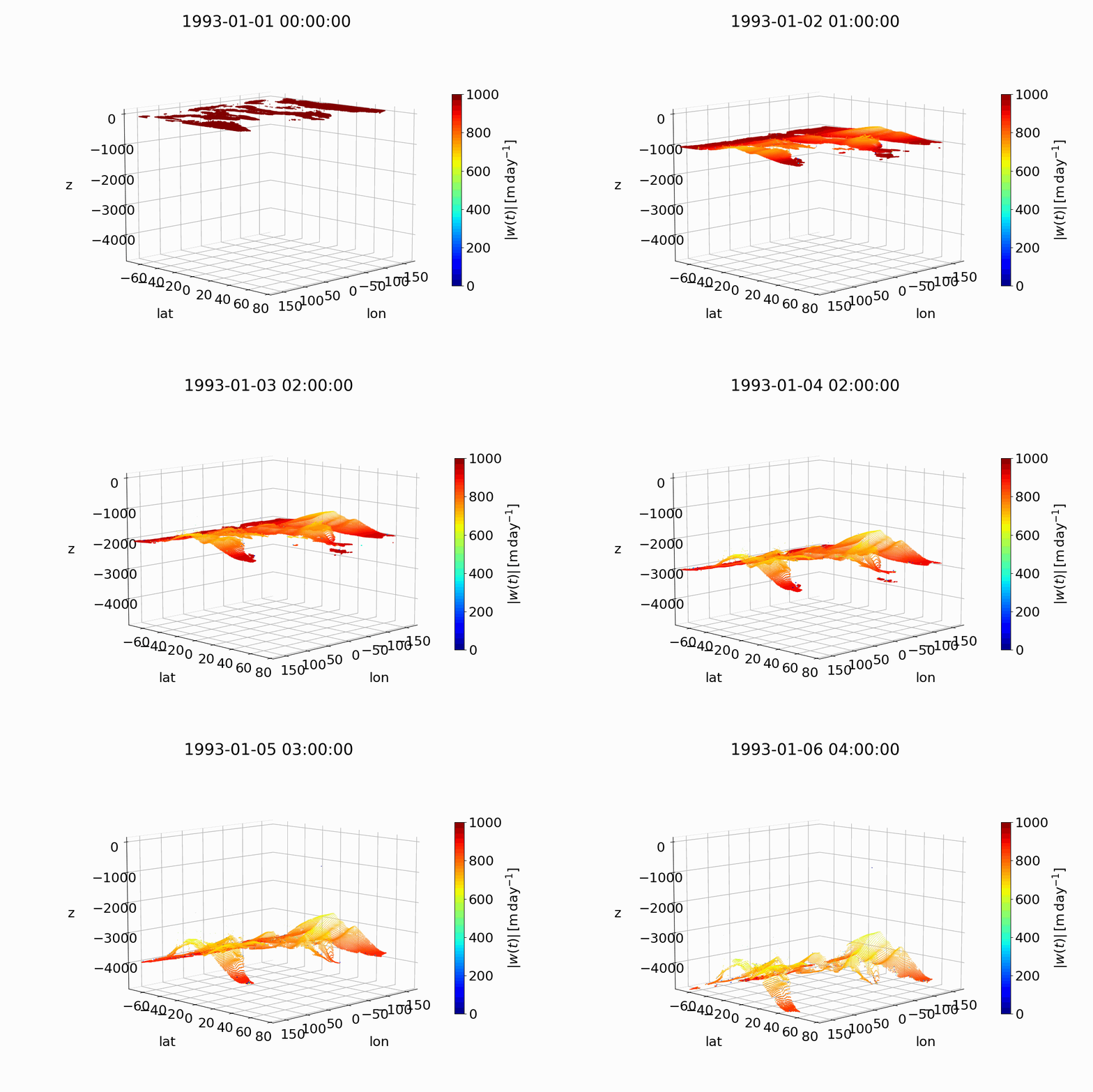
Example of sinking egested particles from the phylum Chordata with the initial sinking speed of 1000 meters per day.